DUNE
The Deep Underground Neutrino Experiment (DUNE) is an international collaboration to advance our understanding of the behavior of neutrinos. The effort includes world renown laboratories and organizations such as Fermilab and CERN with support from thousands of scientists and technologists. The experiment intends to characterize the statistical behavior of the three different versions of neutrinos, which are sub-atomic particles that weakly interact and are constantly bombarding the earth from the sun and other sources.
The DUNE experiment will create neutrinos at Fermilab, directing them through a near field detector and then a far field detector deep underground in South Dakota. A difference between the signals from the two detectors is used to understand how neutrinos evolve over a distance. While the neutrinos are created at Fermilab in Illinois, the far detector is located at the bottom of a disused gold mine in South Dakota approximately 800 miles away. The two detectors under construction in South Dakota are each the volume of approximately five Olympic swimming pools.
Science and specifically large, logistically complex experiments like DUNE are built upon iterations of trials and scaled prototypes. The Physical Sciences Laboratory has a long history and much experience in the creation of detector systems, such as DAYA Bay, Lux Zepplin, and the protoDUNE demonstrator. PSL has contributed key expertise in construction, mechanical design, electronics and circuit board design to bring the DUNE concept to a fully realized system. Additionally, PSL has accumulated years of experience while refining the design of the detectors, conducting qualification tests and manufacturing prototypes through full-scale 1:1 assemblies.
PSL’s role extends beyond the APA itself. Engineers work with teams from institutions around the world to coordinate mechanical interfaces, develop custom handling and assembly hardware, design and produce electrical components, and test detector hardware before it is integrated into the final system.
APA Design and Testing
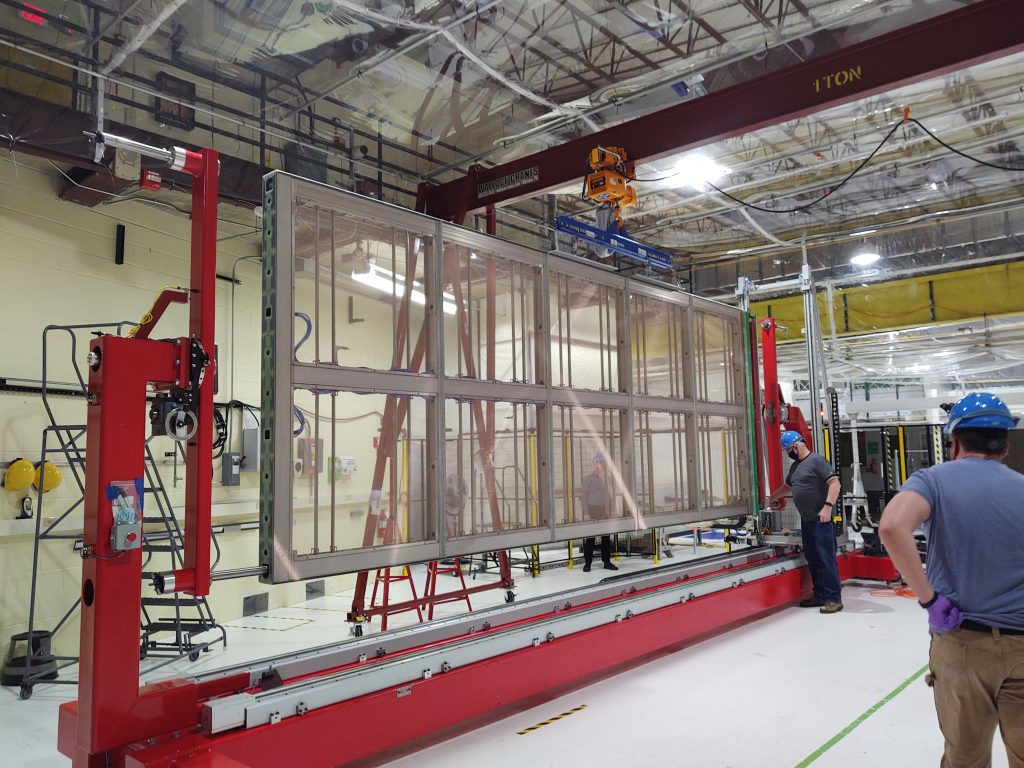
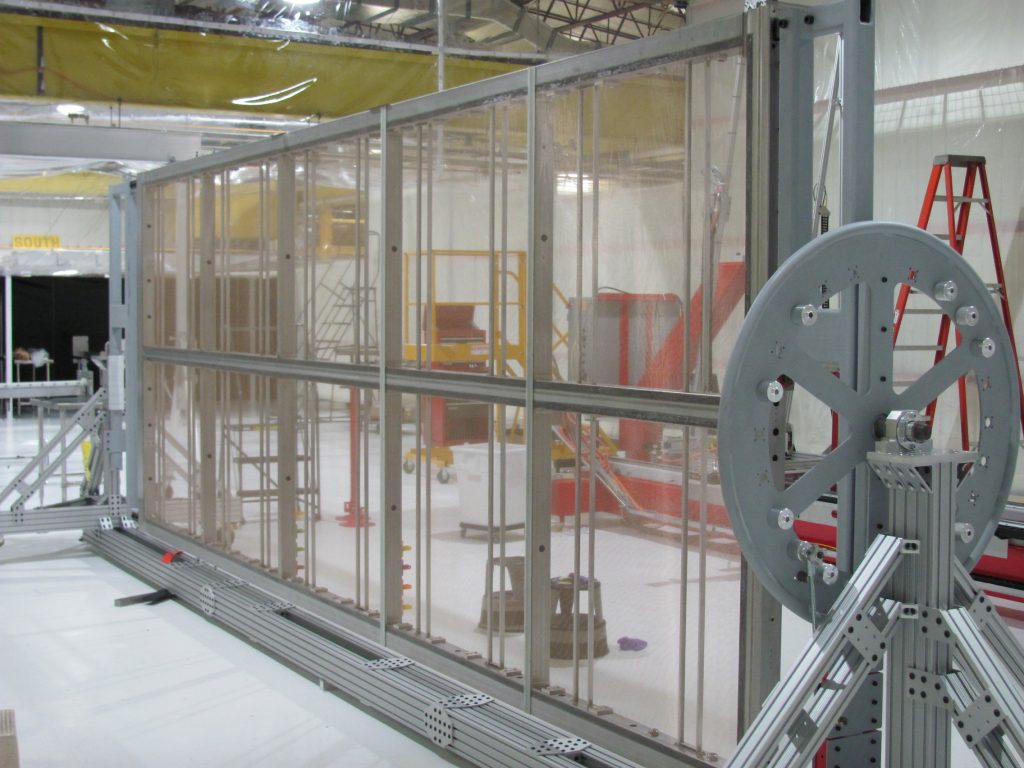
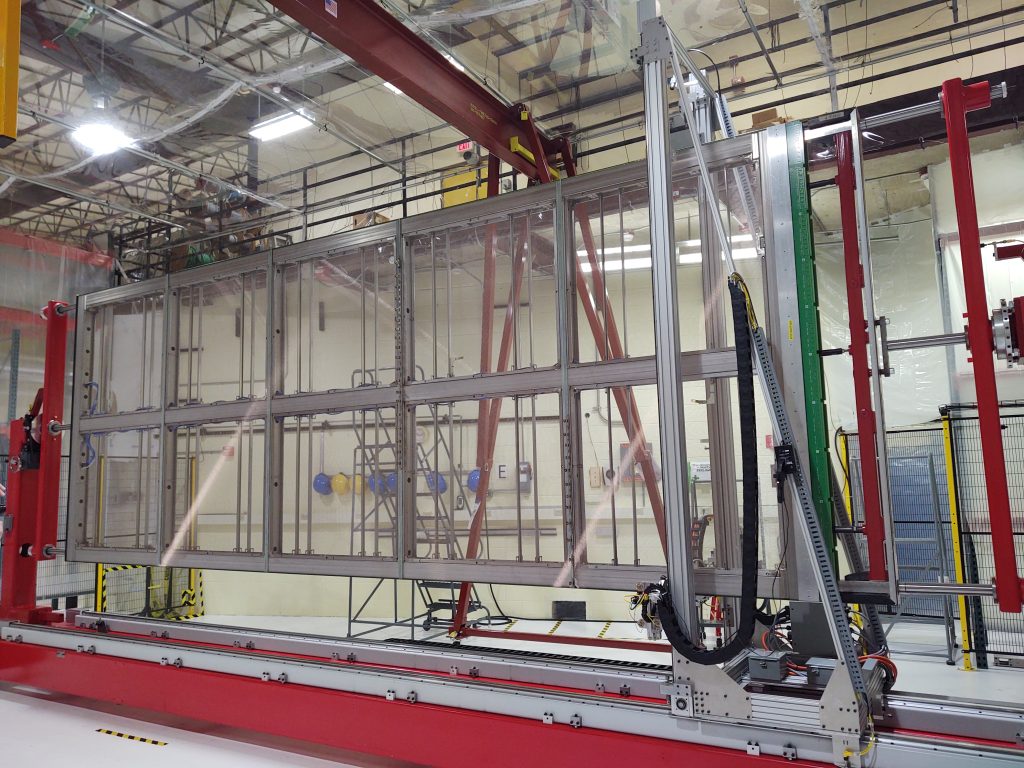
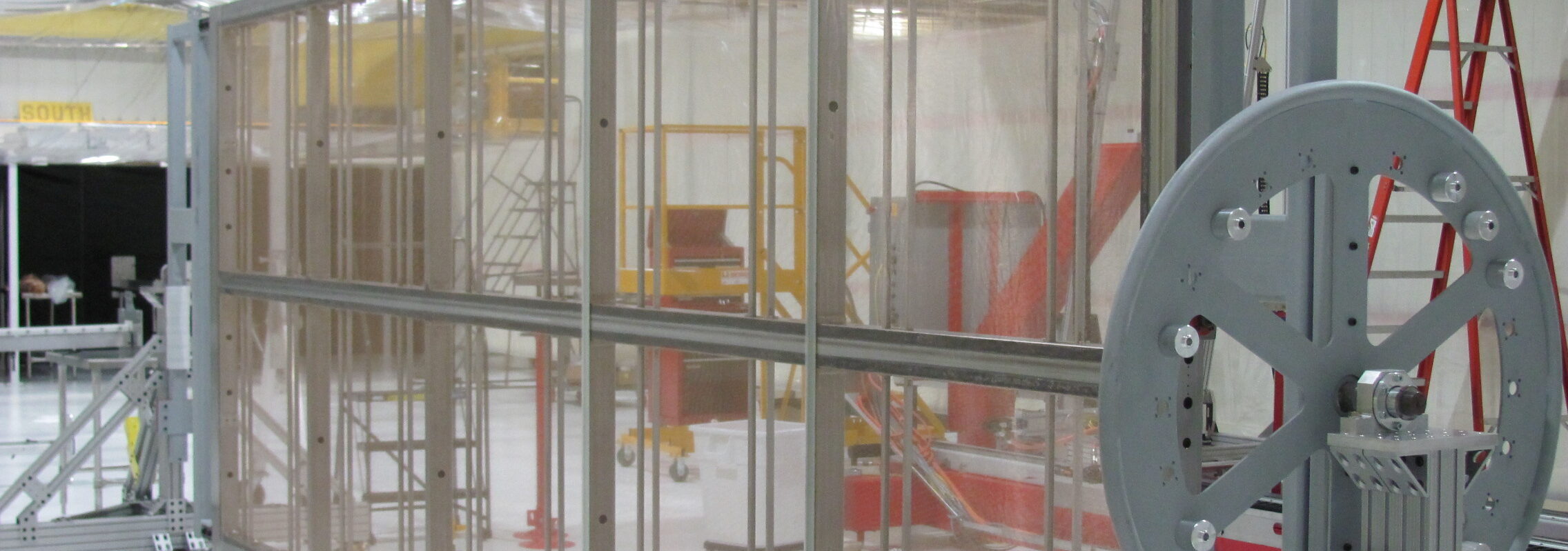
The DUNE Far Detector is actually a pair of large systems, one each for measuring the horizontal and vertical drift of the neutrino beam. PSL worked through several design iterations to develop the final version of the Horizontal Drift detector elements, called the Anode Plane Assembly (APA). The APAs are the smallest unit of assembly and the Far Detector will use 150 APAs to create the final system. The APAs transform a relatively simple physics concept, the creation of an uniform electric field by opposing anode and cathode, into a highly sensitive measurement device that can sense individual electrons that signal when a neutrino passes through the detector. Developing a scientific device that can be produced in mass, built a locations around the globe, and then withstand the bumpy travel to South Dakota requires a significant amount of planning and attention to detail.
The approximately 15 miles of thin copper wire that are wrapped around each APA frame that creates a mesh of 3 distinct layer is what makes the APA so sensitive. The layers of wire are either electrified to create the electric field or monitored to catch drifting electrons. PSL created the mechanical design elements of the APA, such as the frame and lifting and handling hardware, but also tested and selected the special copper wire being used. A particular wire test to characterize tension and aging was started in 2016 and continues today.
PSL uses a laser-based system to measure individual wire tension, allowing technicians to identify and correct wires that do not meet specifications. Full-scale prototypes and mock-ups are also used to refine assembly and handling procedures before production.
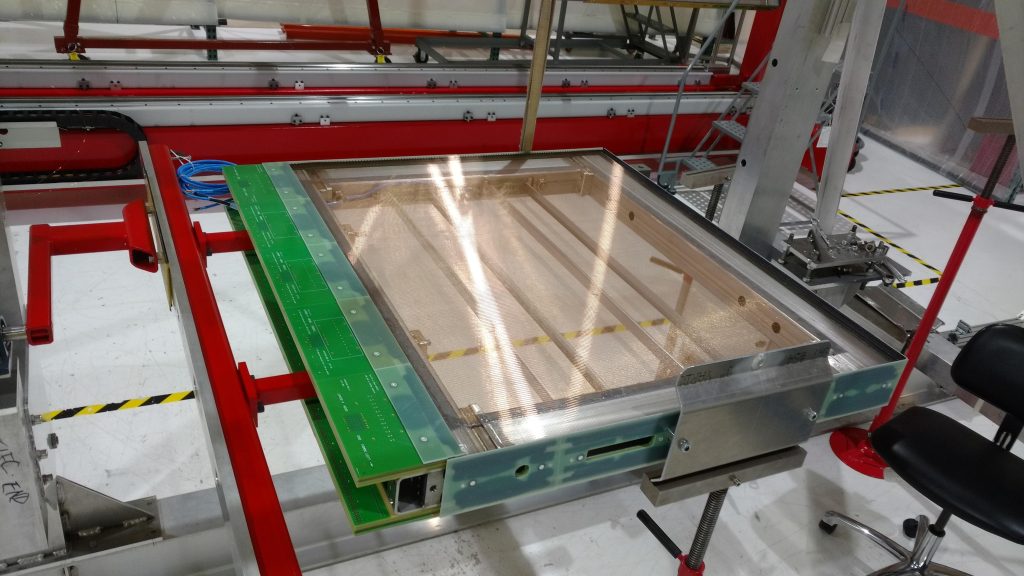
APA Circuit Board Design and Production
APA Winder
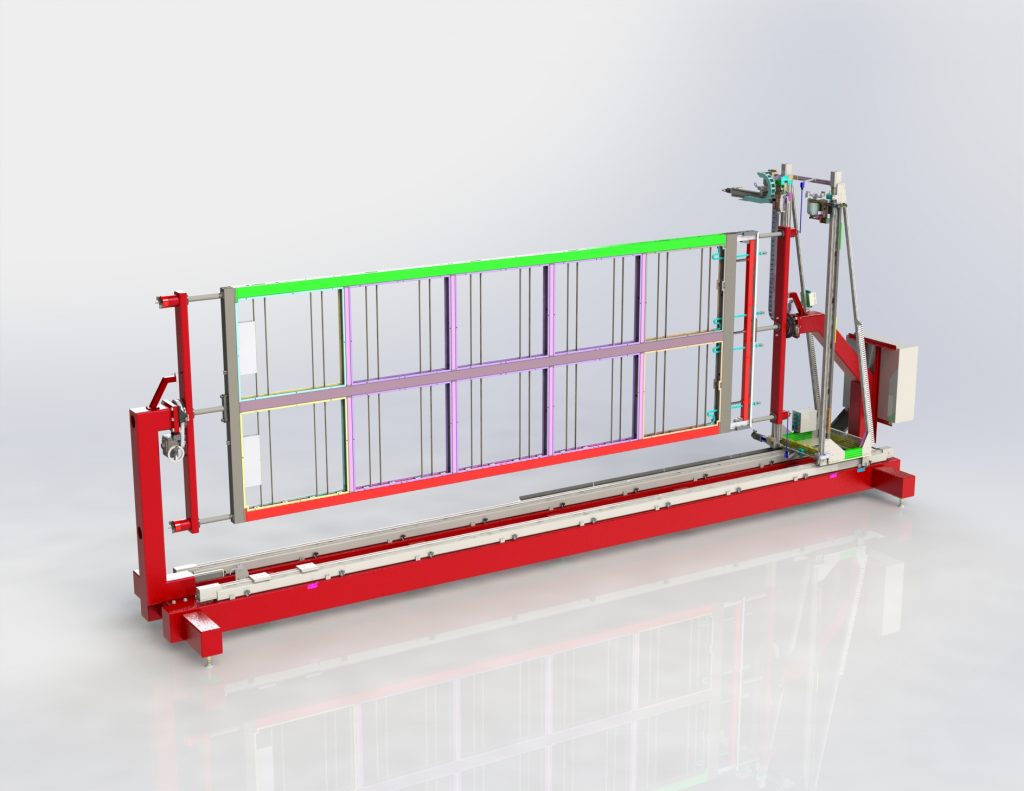
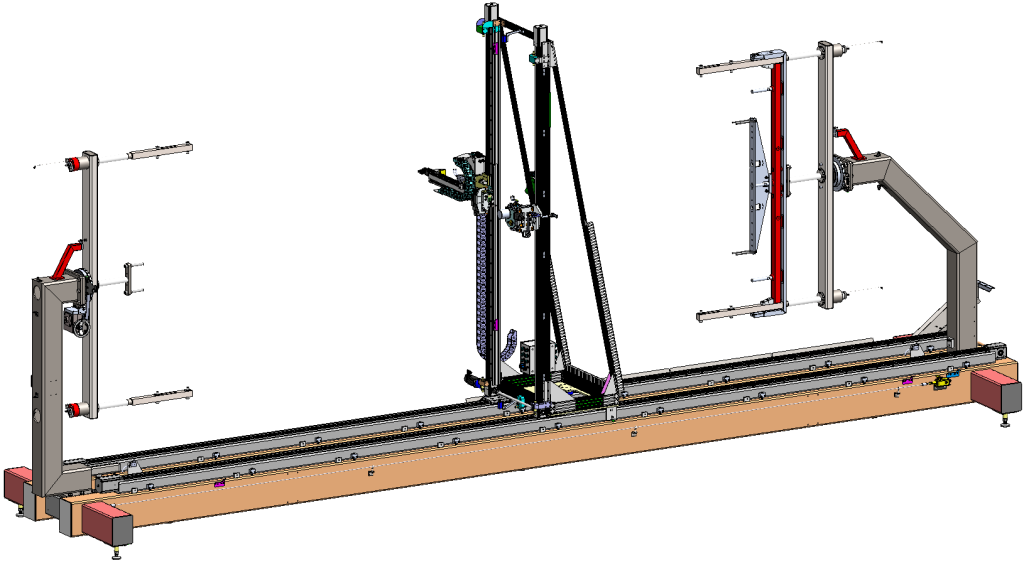
Each APA requires approximately 15 miles of thin copper wire to create the field and sensing layers. The early prototypes were wound by hand at PSL by some incredibly dedicated technicians, producing 150 APAs to the required precision required a more automated approach. Instead PSL developed a robotic winding machine that could accurately place and tension each individual wire, though it still requires a crew of proficient technicians to attach all of the circuit boards and create the solder connections. The APA winder slowly shuttles a bobbin of wire from one end of the APA to the other while maintaining accurate location and wire tension. Five of these winders have been built for use by collaborating institutions to support production of the 150 APAs needed for the Far Detector.
Quality Assurance
Quality and cleanliness is of utmost importance for the DUNE system. All parts must work as intended when they’re finally submerged in sub-freezing temperatures of liquid Argon. Parts will pass through physical inspection for form and fit. Assemblies are checked for completeness and functionality. The APA circuit boards produced at PSL contain passive components, including resistors, capacitors, and connectors, and must operate at high voltage and cryogenic temperatures.
PSL staff have diverse backgrounds and expertise in Quality Assurance and production methodologies used in industries such as electronics, control circuitry, aerospace, defense, heavy equipment, and of course medical/physics research. Therefore PSL uses a wide range of quality control and inspection tools; gages and jigs, CMM inspection tools, load and tension testing, custom electrical test stands, and specialized Keyence vision-based system for inspecting circuit boards.
PSL performs continuity, insulation, and wire-tension testing throughout the APA assembly process.
Electrical Integration
PSL also developed wiring and harnesses connecting the APA to downstream electronics. Error-proofing features help ensure connections are made correctly during assembly and installation.
Prototype testing led to changes in the APA frame and board layout to accommodate wire bundles and electrical connections.
Integration Hardware
The DUNE system is built from many passive components that are necessary to lift, hold, stabilize or position the APAs in exactly the correct location. PSL works with collaborating institutions to coordinate mechanical interfaces between these components and other detector subsystems.
PSL uses 3D CAD models, design reviews, prototypes, and engineering analysis to identify interface issues and refine designs before fabrication.
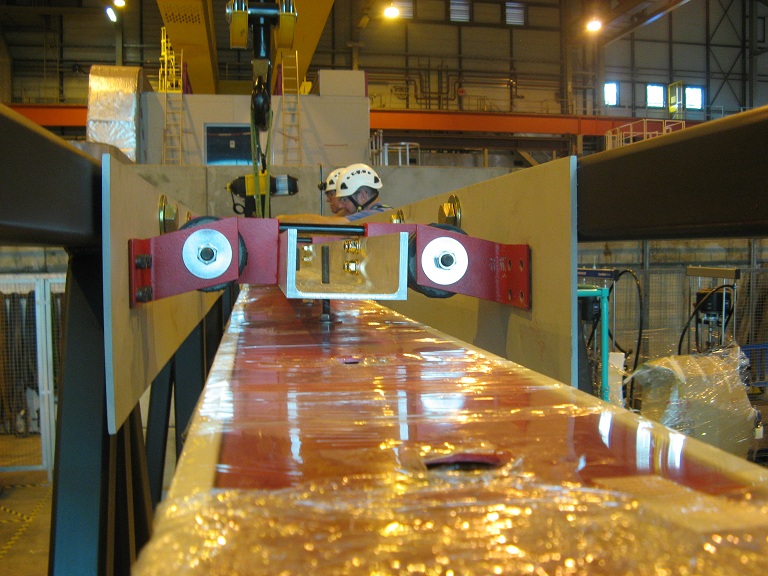
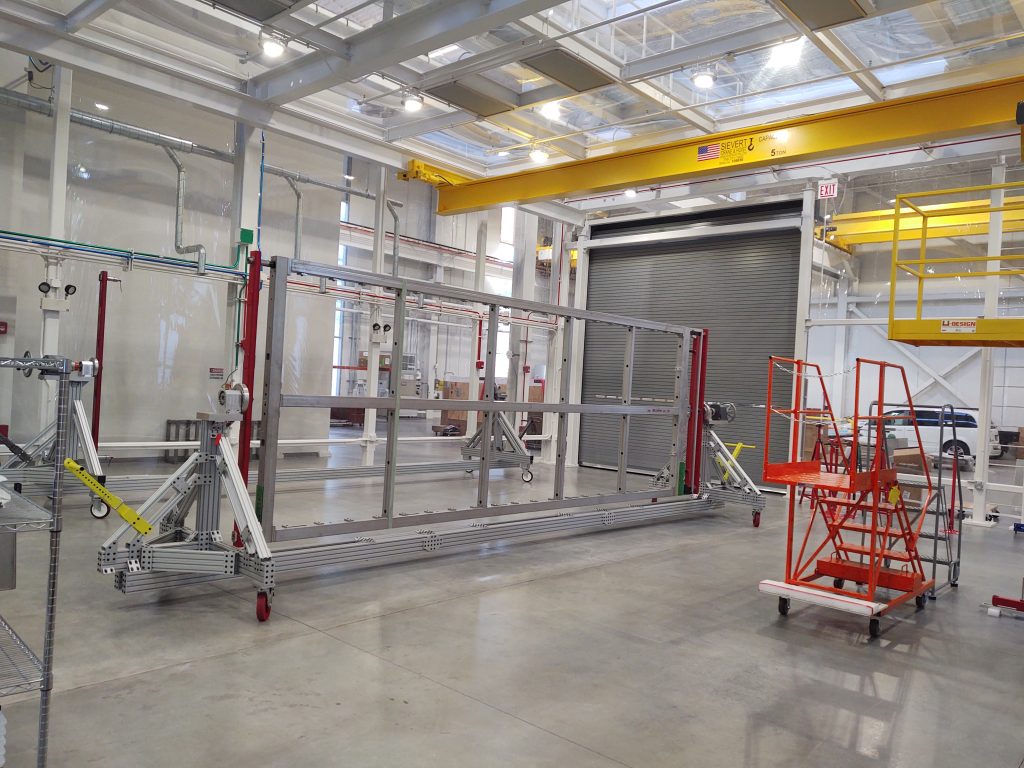
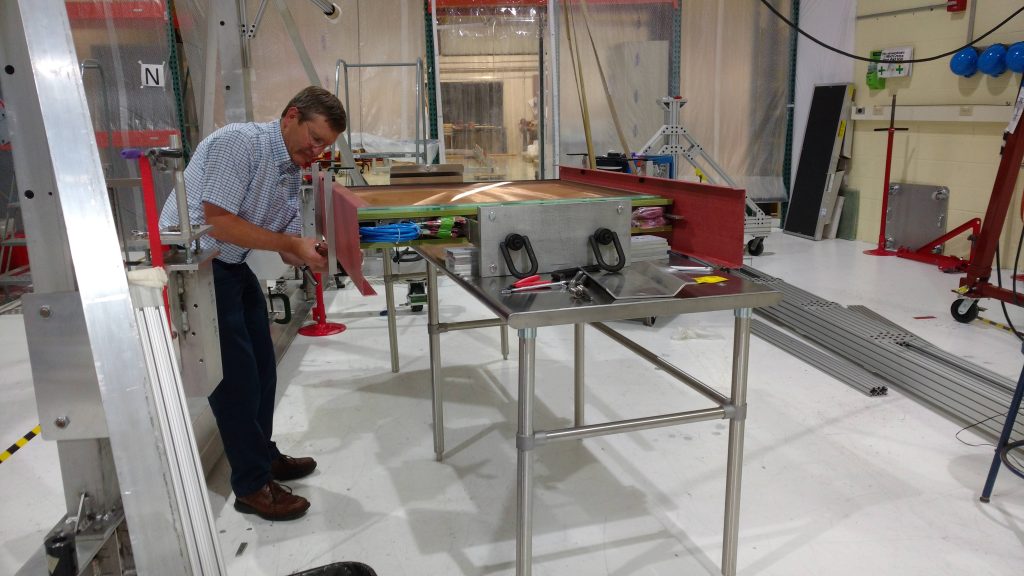
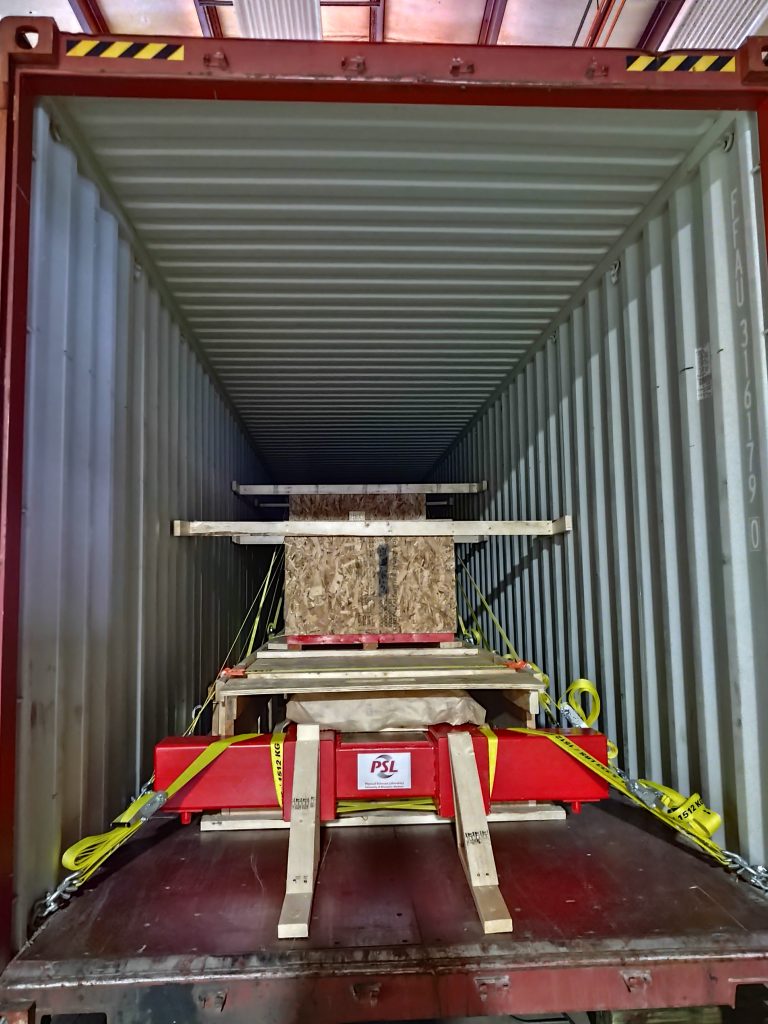
PSL has also developed custom tooling and handling equipment for assembling, lifting, moving, and positioning the APAs. Because the wire-covered APA has limited safe lifting locations, this equipment is designed specifically around its structure and load requirements.
Structural hardware is validated using FEA, traditional calculations, and documented load cases before approval and use at CERN.
Prototyping and Continuous Improvement
Full-scale prototypes and mock-ups allow PSL to test assembly sequences, interfaces, and handling procedures before final production. Lessons learned during prototyping and integration are incorporated into the final designs.
Additional Media
Read more about the project through the articles below, featuring additional information from the University of Wisconsin and Fermilab, along with a downloadable project datasheet.
Watch the video by Fermilab below to learn more!