Image courtesy of the W7-xX website
W7-X
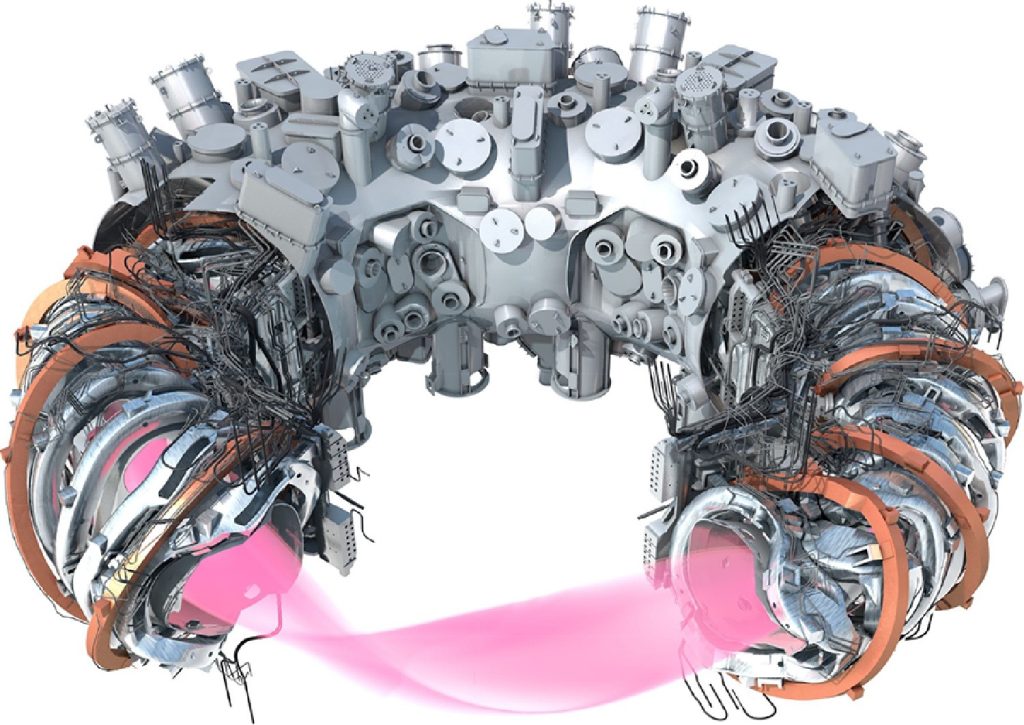
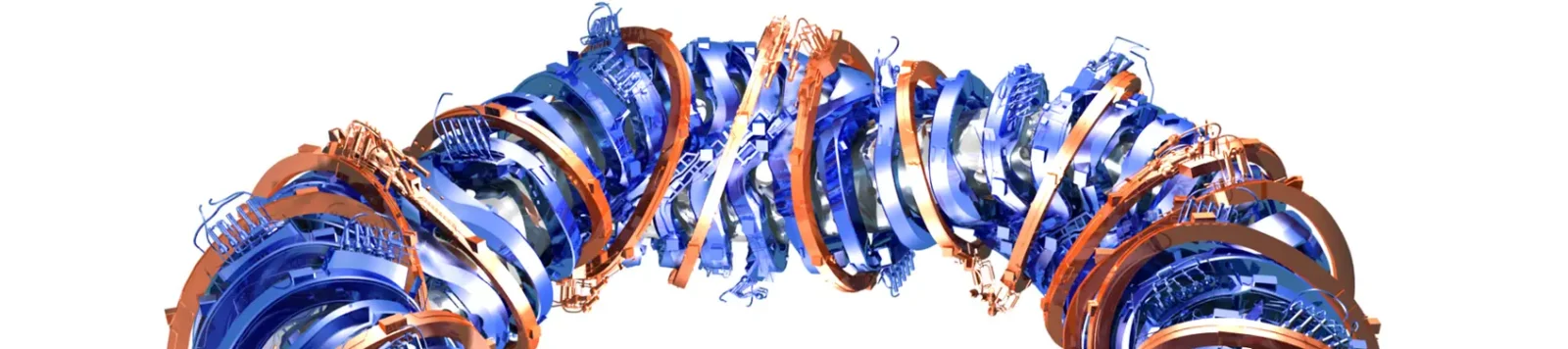
Wendelstein 7-X (W7-X), located at the Max Planck Institute for Plasma Physics in Greifswald, Germany, is the world’s largest fusion device of the stellarator type. The experiment is designed to investigate whether stellarators can provide a practical path toward future fusion power plants by testing an optimized magnetic field for stable plasma confinement. At the core of W7-X is a system of 50 uniquely shaped, non-planar superconducting magnet coils that generate the magnetic field needed to confine high-temperature plasma. The complex coil geometry was developed through extensive optimization calculations and allows W7-X to investigate plasma confinement without relying on the large plasma current used in tokamaks. This makes long-duration operation possible, with plasma discharges designed to last up to 30 minutes and demonstrate the potential for continuous operation.
The superconducting coils operate at temperatures close to absolute zero using liquid helium. Each coil is approximately 3.5 meters tall and weighs about six tons, with the specialized geometry and demanding mechanical requirements presenting significant engineering and manufacturing challenges. W7-X was assembled between 2005 and 2014, produced its first plasma on December 10, 2015, and began scientific experiments with its first hydrogen plasma in February 2016.
PSL’s Contributions
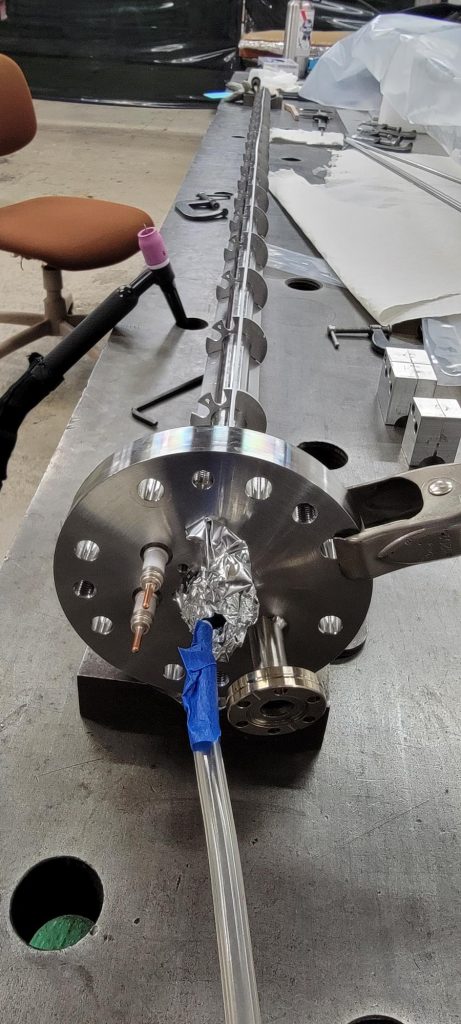
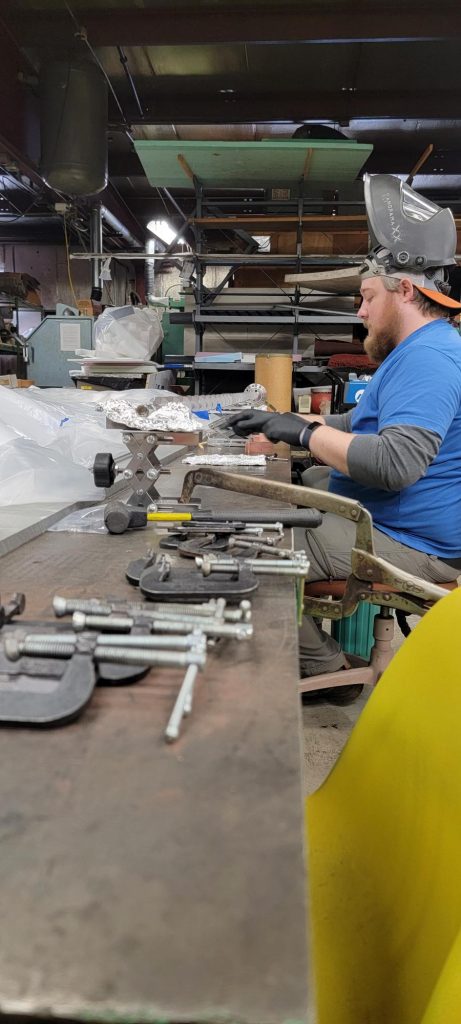
PSL supported the Wendelstein 7-X project by providing engineering and manufacturing expertise for specialized components used in the experiment. The project required precision fabrication and close attention to demanding mechanical and dimensional requirements associated with one of the most complex fusion research facilities in the world. PSL’s work contributed to the development and fabrication of specialized hardware for a system built around highly complex superconducting magnet assemblies, cryogenic systems, and precision-engineered components.
Drawing on decades of experience in precision fabrication, engineering, and scientific instrumentation, PSL worked with project partners to produce components capable of meeting the demanding requirements of W7-X. The project reflects PSL’s ability to translate complex scientific and engineering requirements into precisely fabricated hardware for large-scale research facilities.
Images