IceCube Projects
Nobel Prize Recognition
Celebrating Francis Halzen and the discovery of high-energy astrophysical neutrinos
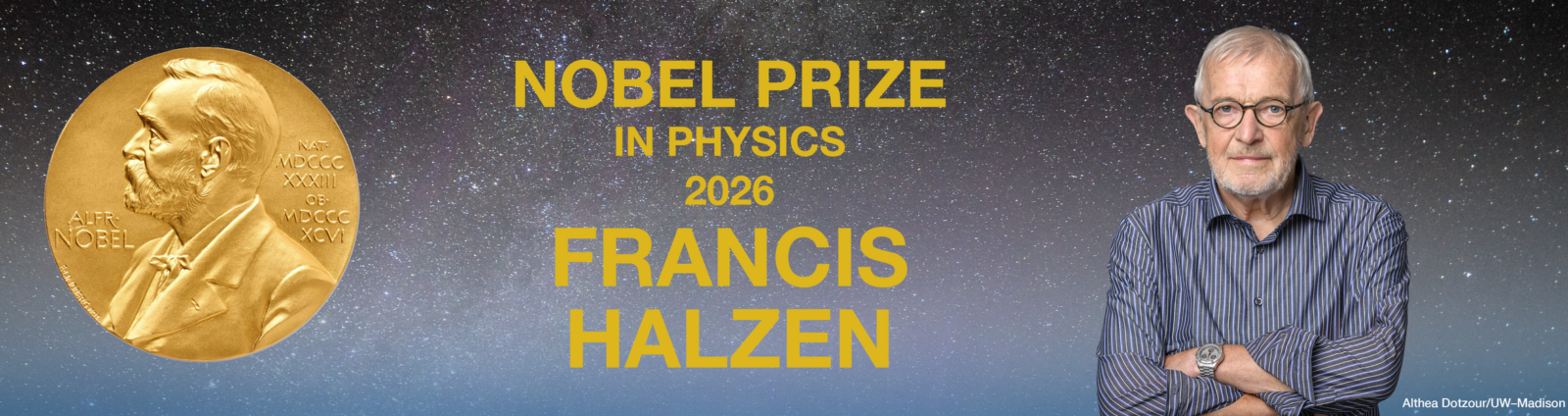
In 2026, University of Wisconsin–Madison Professor Francis Halzen was awarded the Nobel Prize in Physics for his decisive contributions to the IceCube Neutrino Observatory and the discovery of high-energy neutrinos of astrophysical origin.
Halzen conceived the idea of using the pristine ice beneath the South Pole as a detector for these elusive particles. His vision grew into IceCube, a cubic-kilometer neutrino observatory containing thousands of light sensors embedded deep within the Antarctic ice. In 2013, IceCube detected high-energy neutrinos originating beyond our solar system, opening a new way of studying some of the most energetic phenomena in the universe and establishing neutrino astronomy as a powerful tool for exploring the cosmos.
The achievement reflects decades of collaboration among scientists, engineers, technicians, and institutions around the world. The Physical Sciences Laboratory played an important role in bringing this ambitious scientific vision to reality, providing engineering, fabrication, testing, and deployment expertise for IceCube and its specialized drilling systems. PSL designed and built the hot water drill used to create the deep holes required to deploy the detector strings, and PSL engineers and staff supported the project through construction and deployment at the South Pole.
Halzen has recognized PSL as an important part of the research infrastructure that made IceCube possible, highlighting the talented engineers and technical expertise that supported the project. His Nobel Prize celebrates not only a groundbreaking scientific idea, but also the collaborative effort and engineering innovation that transformed that idea into one of the world’s most remarkable scientific observatories.
PSL proudly congratulates Francis Halzen on receiving the 2026 Nobel Prize in Physics. We are honored to have contributed to the IceCube project and to have been part of the extraordinary scientific and engineering effort behind this groundbreaking work!
Learn more about the amazing Francis Halzen at the links below!
IceCube
The IceCube Neutrino Observatory studies elusive neutrinos using a detector embedded deep within the Antarctic ice. PSL began its IceCube work by designing and building the hot water drill system used to deploy the detector strings.


IceCube Upgrade
The IceCube Upgrade expanded the existing neutrino detector at the South Pole with new optical sensors and upgraded instrumentation. PSL contributed engineering and fabrication expertise to the next generation of IceCube technology.
IceCube-Gen2
IceCube-Gen2 will expand the IceCube Neutrino Observatory to create a larger, more sensitive detector beneath the Antarctic ice. PSL is contributing engineering and design expertise to support the next generation of neutrino research.
