Antarctic Glaciological Research: Shot Hole Drill
As part of the International Polar Year, researchers from Penn State University and the Center for the Remote Sensing of Ice Sheets (CReSIS) conducted seismic studies of the Thwaites Glacier in West Antarctica, one of the least understood and most rapidly changing regions of the Antarctic ice sheet. Their goal was to better understand how the glacier interacts with the bedrock beneath it and how those interactions influence ice flow, glacier stability, and future sea level rise.
The research relied on active-source seismology, a technique that sends acoustic waves through the ice and measures their reflections from internal ice layers and the ice-bedrock interface. Collecting high-quality seismic data required drilling hundreds of precisely spaced holes to place explosive charges and sensors, making dependable field equipment essential to the success of the project.
Engineering a Faster Drilling System
To meet these demands, PSL partnered with the University of Wisconsin–Madison Ice Coring and Drilling Services (ICDS) to design and manufacture the Shot Hole Drill, a drilling system developed specifically for rapid seismic surveys in Antarctica. Working closely with ICDS researchers, PSL engineered the drill to satisfy demanding field requirements, including drilling rates of approximately two meters per minute and the ability to complete up to 20 holes per day during the limited Antarctic field season.
Unlike hot water drills that melt through the ice, the Shot Hole Drill mechanically cuts the ice, allowing faster drilling at shallow depths while reducing setup time between locations. The system was designed to drill holes between 75 and 100 meters deep, enabling researchers to install seismic charges across large survey areas with greater efficiency than previous drilling methods.
Built for the Antarctic
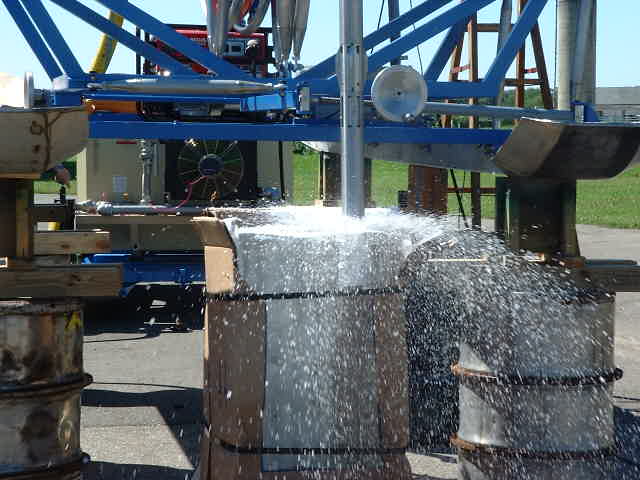
Designing equipment capable of operating reliably in Antarctica required balancing speed, durability, and mobility. PSL engineers developed an air-powered drill that uses high-pressure turbines to drive the cutting head while compressed air removes ice chips from the borehole, preventing clogging and maintaining drilling efficiency. Multiple drill head designs were tested to ensure reliable operation in varying ice conditions.
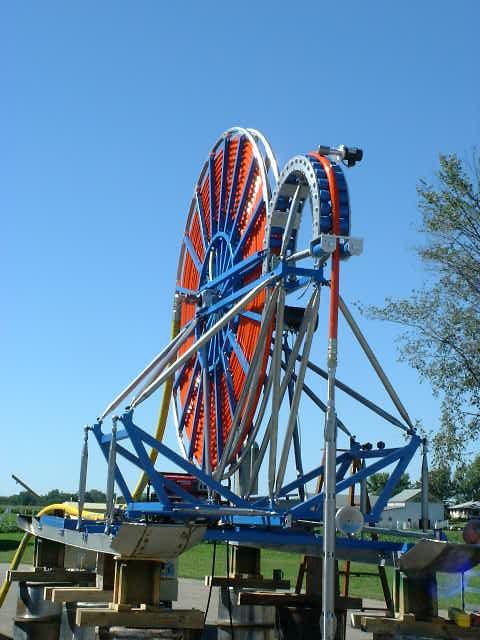
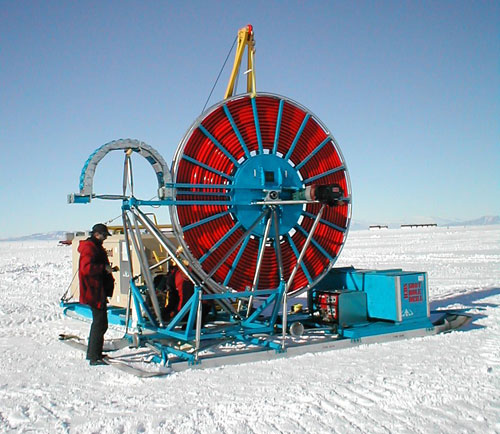
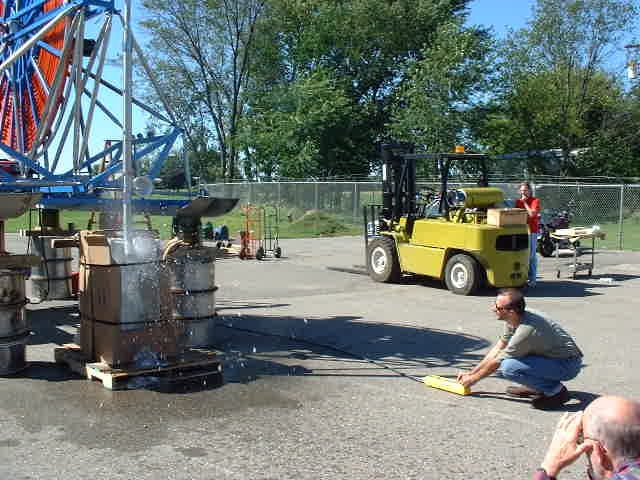
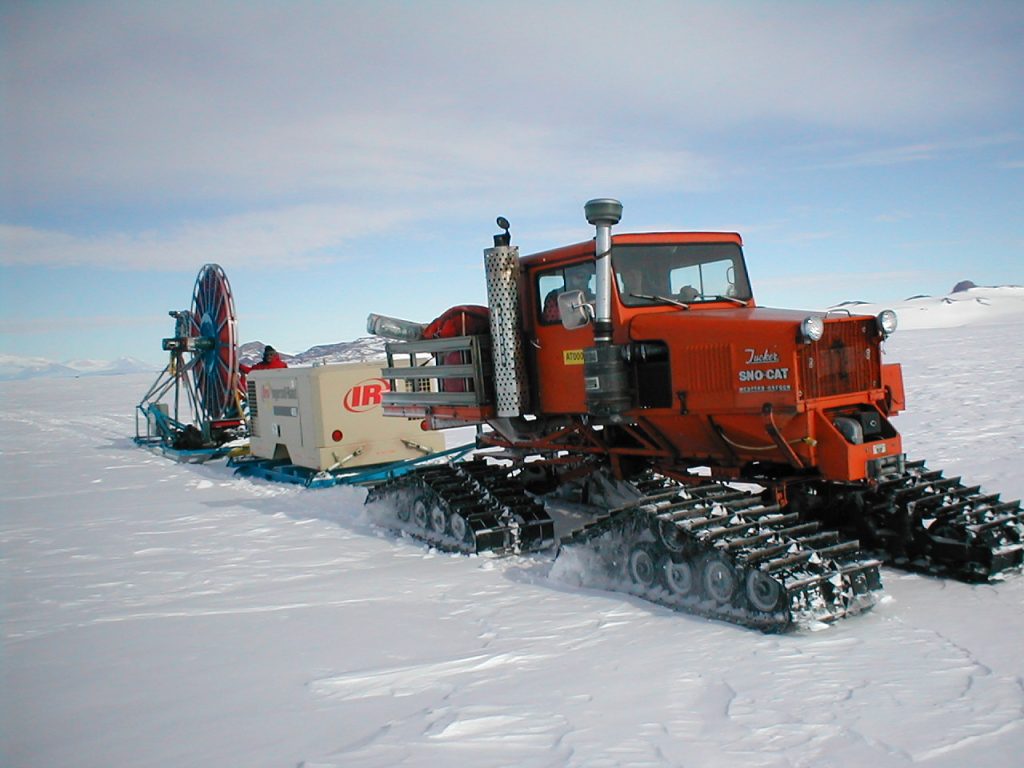
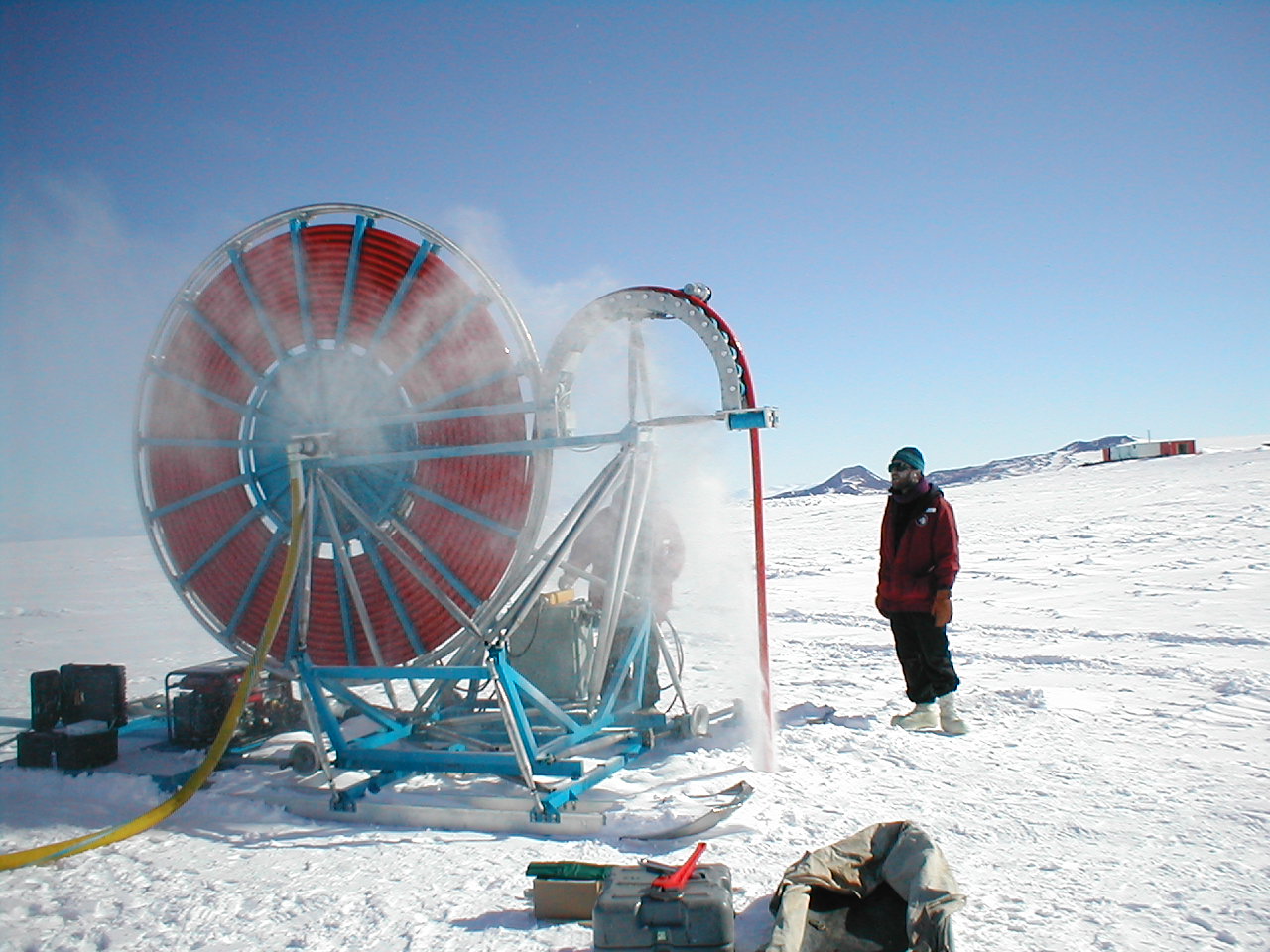
The complete drilling system included ski-mounted air compressors for transport across the ice, a custom hose reel capable of handling more than 100 meters of air hose, and a control system for safely deploying and retrieving the drill. Before shipment, PSL assembled and tested the entire system at its facility to verify performance before deployment to McMurdo Station and the Antarctic field sites.
Supporting Polar Research
Following assembly and testing in Antarctica, the Shot Hole Drill was deployed during multiple field seasons to support seismic surveys across West Antarctic ice streams. Each research campaign required hundreds of precisely spaced boreholes, allowing scientists to collect data over large areas and compare the behavior of different glaciers.
The Shot Hole Drill provided researchers with a faster, more efficient way to gather the seismic data needed to study glacier dynamics and the interaction between ice and the underlying bedrock. Designed and built by PSL under contract with UW–Madison’s ICDS and the National Science Foundation, the system continues to demonstrate how specialized engineering supports scientific research in some of the world’s most demanding environments.
Images